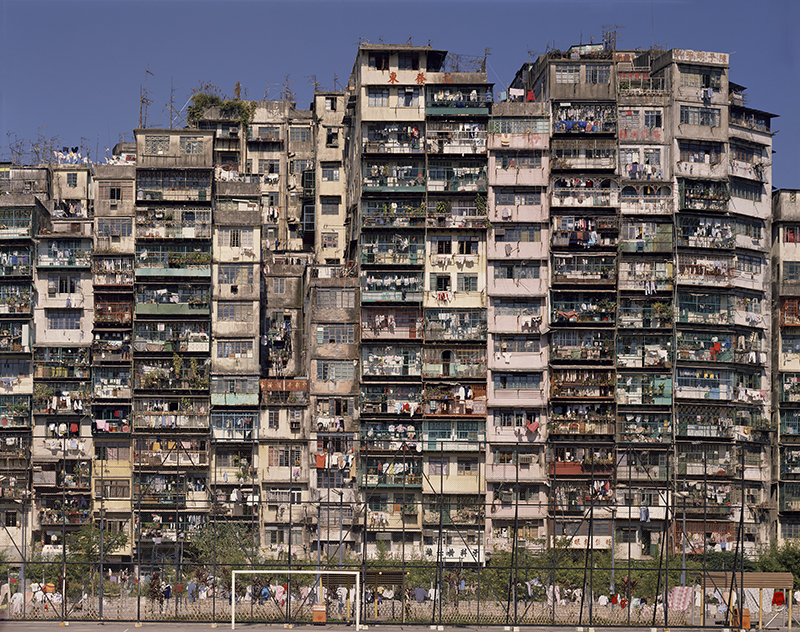
Spyre began in 2017 — not as a board game about spires, but as a game about one of the most remarkable urban environments that ever existed: the Kowloon Walled City.
For those who don't know it: Kowloon Walled City was a densely populated, largely ungoverned enclave in Hong Kong. At its peak, it housed over 35,000 residents in a 6.5-acre area — one of the most densely populated places in human history. Buildings grew upward and inward, layered on top of each other in a way that defied conventional architecture.
Adam and I were captivated by this idea of a vertically built dense city. What would it feel like to design a game around that structure? The core mechanic came quickly: tiles that could face multiple players simultaneously, placed on a shared grid that everyone was building into together.
What We Kept, What We Changed
As the game evolved, we deliberately steered away from the darker elements of Kowloon's history — the unregulated status, the crime, the gang activity. We wanted the mechanical inspiration without the baggage.
One element that did survive the retheme: a mechanic involving tributes to the Triads to gain favor. It's still in Spyre today, abstracted into something that fits the current theme — but its DNA traces directly back to those early Kowloon sessions.
The Long Road to Spyre
It took years of refinement. The theme changed. The components changed. The name changed. But the heart of the game — that tile-placement mechanic creating meaningful spatial interaction between players — stayed constant throughout.
In August 2025, we submitted Spyre to the Panda 25 in 25 Contest. In November 2025, it won. I'll be sharing more about the design decisions and the game's evolution in upcoming posts.